
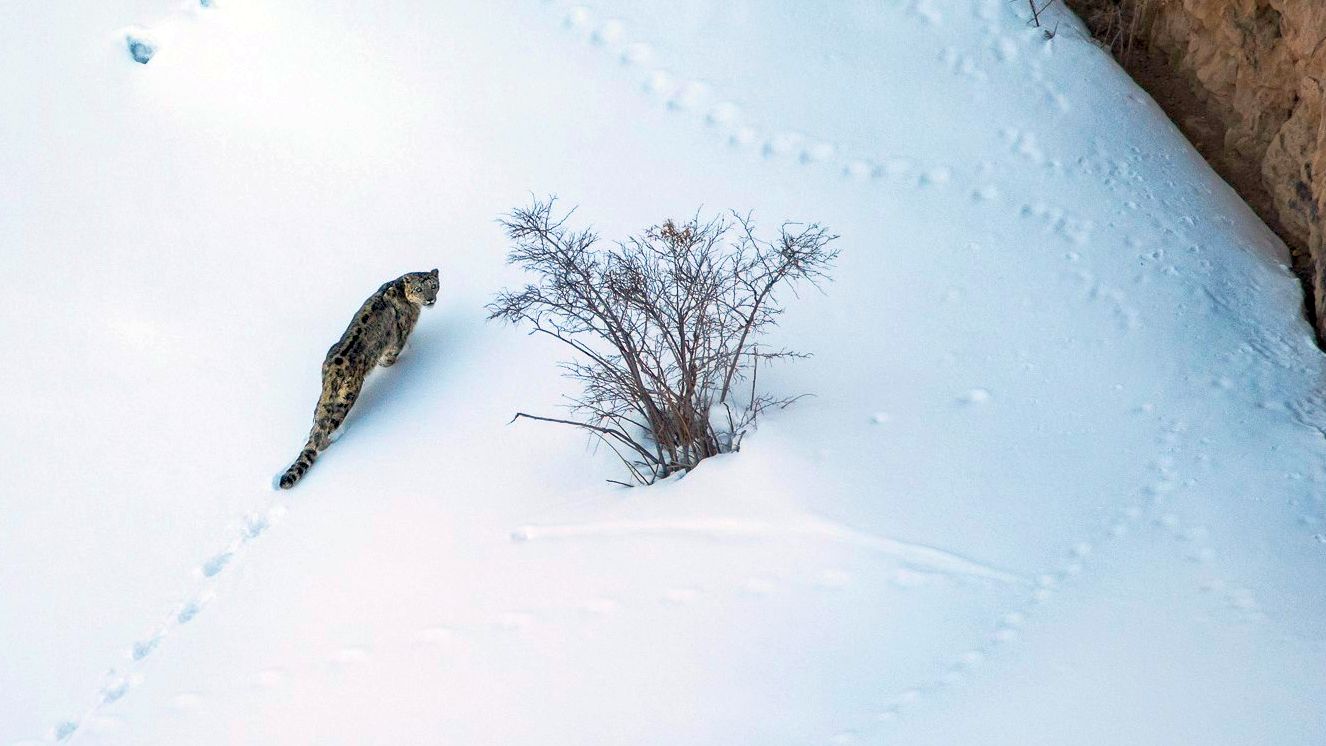
SPAI Snow Leopard Population Study in Himachal Pradesh: What the Latest Assessment Reveals
The latest Snow Leopard Population Assessment of India (SPAI) work in Himachal Pradesh offers an encouraging picture of one of the Himalayas’ most elusive predators. The second state-wide assessment estimated 83 snow leopards across the state’s surveyed high-altitude landscape, compared with an earlier estimate of 51. The result is important not simply because the number is higher, but because the study provides a clearer picture of where snow leopards occur, how their prey base is changing, and why local participation remains central to conservation.
For anyone interested in wildlife, Spiti Valley is particularly significant. The latest assessment recorded some of the highest snow leopard densities in the high-altitude areas of Spiti, Pin Valley, Kinnaur and Tabo. This makes the region an important landscape for responsible wildlife observation and explains the growing interest in carefully planned spiti valley snow leopard tours. However, seeing a snow leopard should never be the only objective: understanding the ecosystem and travelling in a way that does not disturb wildlife is equally important.
What is the SPAI Snow Leopard Population Assessment?
The Snow Leopard Population Assessment of India, commonly known as SPAI, is a scientific framework used to estimate the distribution and population of snow leopards in India. Himachal Pradesh was among the first states to undertake a systematic state-level assessment. The first population estimation in the state was completed in 2021 after fieldwork that began under the wider Population Assessment of the World’s Snow Leopards (PAWS) framework.
The second round of assessment in Himachal Pradesh began in late 2023 and fieldwork continued through 2024. The Wildlife Wing of the Himachal Pradesh Forest Department worked with the Nature Conservation Foundation and local communities to survey a large portion of the state’s snow leopard habitat. The 2025 report, titled Status of Snow Leopard in Himachal Pradesh, provides the detailed results of this assessment.
The 83-Snow-Leopard Estimate: What Does It Mean?
The second assessment estimated 83 snow leopards in Himachal Pradesh, with a 95% confidence interval of 67 to 103 individuals. The earlier assessment estimated 51 individuals, with a 95% confidence interval of 44 to 73. The difference represents a 62.7% increase in the point estimate. It is important, however, to understand that a population estimate is not the same as a simple head count. Researchers combine camera-trap detections, individual identification, sampling design and statistical modelling to arrive at an estimate.
During the latest assessment, 44 individual snow leopards were identified from camera-trap images. The same number of individuals had been identified during the previous assessment, while the statistical estimate increased. This is one reason the result should be interpreted as evidence of a stronger estimated population rather than as proof that exactly 32 additional animals were individually counted.
Why Spiti Valley Stands Out
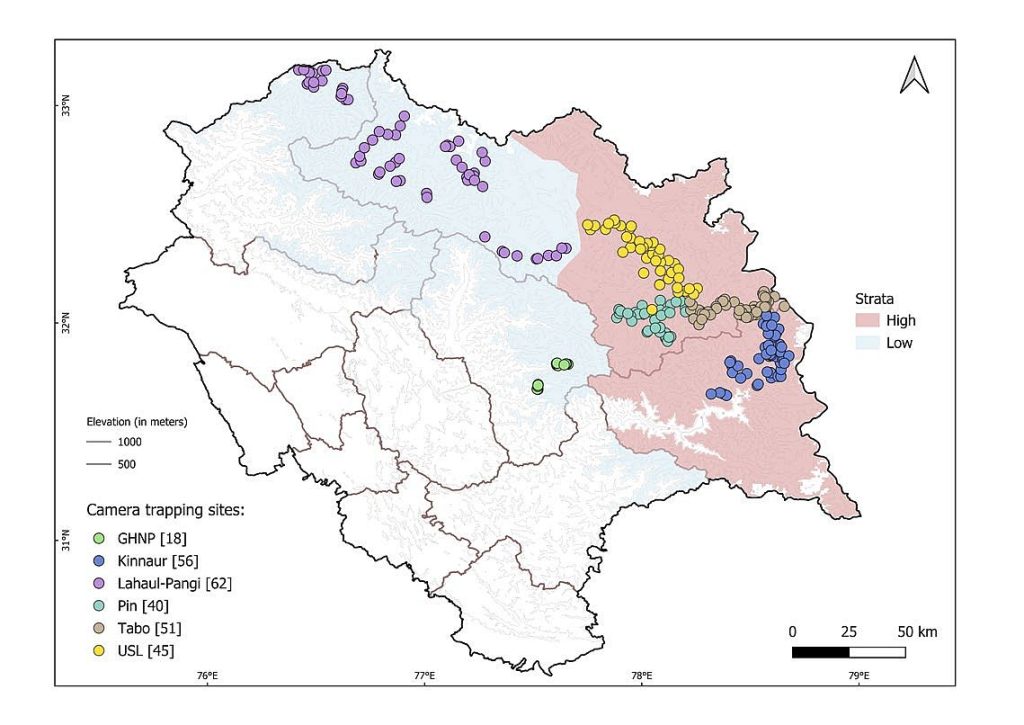
Spiti Valley remains one of the most important snow leopard landscapes in Himachal Pradesh. The assessment divided the state’s habitat into higher- and lower-occupancy strata. The high-occupancy areas included the high-altitude parts of Spiti, Pin Valley and Kinnaur, while lower-occupancy areas included landscapes such as the Great Himalayan National Park region, Lahaul and Pangi.
The high-altitude regions of Spiti recorded an estimated density of 0.53 snow leopards per 100 square kilometres, the highest reported density among the surveyed areas. Pin Valley followed at 0.51, Kinnaur at 0.44, and Tabo at 0.35 individuals per 100 square kilometres. The camera traps in the high-altitude Spiti sampling area detected snow leopards 90 times and identified 12 individuals, while the Tabo area recorded 46 detections and six individuals.
These findings help explain why Spiti has become a major destination for wildlife photographers and naturalists. A well-planned snow leopard expedition spiti experience can provide an opportunity to learn about the species in its natural environment while also supporting local guides, drivers, homestays and conservation-linked livelihoods. Responsible tourism is especially important because the same landscape that attracts visitors is also a fragile habitat for wildlife and local communities.
How Researchers Surveyed Such a Difficult Landscape
Snow leopards are difficult to study because they live across vast, rugged and sparsely populated mountain terrain. The animals are naturally elusive, their population density is low, and many of their habitats are difficult to reach. A conventional wildlife census therefore cannot be used. Camera trapping and individual identification provide a practical way to collect repeated evidence from large areas.
For the second assessment, 271 infrared camera traps were deployed across the surveyed snow leopard landscape. The cameras were placed within a structured sampling design, including a 4-by-4 kilometre grid approach in relevant habitat. Fieldwork was conducted across different seasons so that researchers could sample representative areas and improve the reliability of the resulting estimate.
Camera-trap photographs were examined using the distinctive rosette patterns on each snow leopard’s coat. These patterns work much like a natural fingerprint because they differ between individuals. The image-identification process included independent checks by researchers, followed by review of mismatches. This reduces the possibility of counting the same animal as different individuals.
Where Snow Leopards Were Detected
| Survey Area | Area Surveyed (km²) | Camera Traps | Detections | Individuals Identified |
|---|---|---|---|---|
| Kinnaur | 1,229 | 56 | 58 | 9 |
| Tabo | 862 | 51 | 46 | 6 |
| Pin Valley | 754 | 39 | 35 | 8 |
| High-altitude Spiti | 1,191 | 45 | 90 | 12 |
| Lahaul–Pangi | 5,096 | 62 | 32 | 8 |
| Great Himalayan National Park | 256 | 18 | 1 | 1 |
The figures show why Spiti, Pin Valley, Kinnaur and Tabo are so important in the state-wide picture. They also demonstrate why a wildlife tour should focus on habitat knowledge rather than promising guaranteed sightings. A snow leopard may be present without appearing in front of visitors, and avoiding pressure on the animal is part of ethical wildlife tourism.
The Prey Base: A Major Reason for Optimism
Snow leopard conservation cannot be separated from the condition of its prey. Mountain ungulates such as blue sheep and Himalayan ibex form an important part of the snow leopard diet. When prey populations remain healthy, the ecosystem can support predators more effectively.
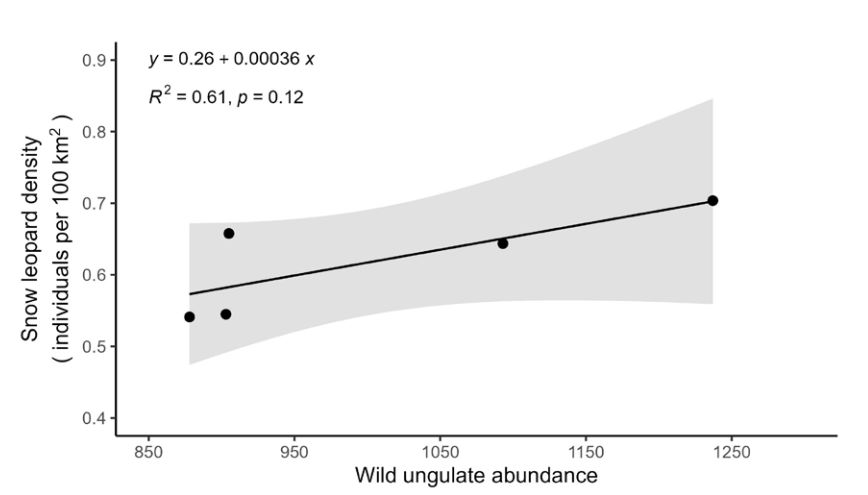
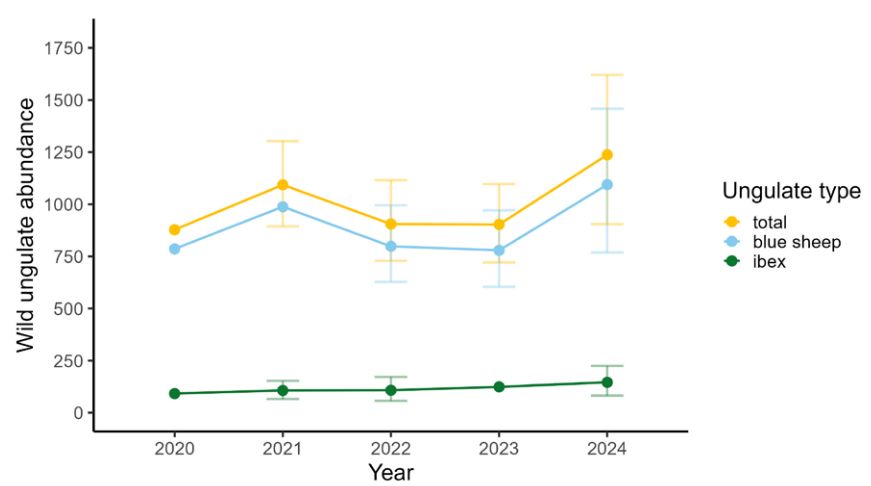
Monitoring in Spiti showed changes in wild ungulate abundance over the assessment period. The reported blue sheep count increased overall from 786 in 2020 to 1,094 in 2024 in the monitored habitat, although the annual trend was not perfectly linear. The Himalayan ibex count increased from 92 in 2020 to 146 in 2024. The broader assessment also found that snow leopard population density increased with the abundance of key prey species.
Local Communities Are Central to Conservation
One of the strongest lessons from the assessment is that large-scale wildlife monitoring cannot succeed through technology alone. People living in snow leopard landscapes possess detailed knowledge of valleys, cliffs, animal movements, grazing areas and seasonal conditions. Their participation helped researchers work efficiently across difficult terrain and contributed directly to data collection.
The project included training for Forest Department personnel and local residents. Women from Kibber village, for example, were trained in camera-trap installation and in processing and identifying camera-trap images. Local participants were able to learn how to distinguish individual snow leopards by their rosette patterns and contribute to the scientific workflow.
This community involvement is important beyond a single survey. When conservation creates meaningful roles for local people, it can strengthen stewardship while providing opportunities connected with research, guiding and responsible tourism. For travellers joining spiti valley snow leopard tours, choosing operators who respect local communities and wildlife guidelines can help ensure that tourism contributes positively to the region.
Other Wildlife Recorded by Camera Traps
Although the snow leopard was the main target species, the camera traps also recorded a wider range of Himalayan mammals. The survey documented species including Pallas’s cat, woolly flying squirrel, blue sheep, Himalayan brown bear, Himalayan wolf, Himalayan ibex, common leopard, mountain weasel, Himalayan musk deer, red fox, stone marten and yellow-throated marten.
Two observations were especially notable because Pallas’s cat and the woolly flying squirrel were recorded in the state during this assessment in areas where their presence had not previously been documented in the survey context. Such incidental records show the wider value of systematic camera trapping: a study designed around one species can reveal important information about an entire mountain ecosystem.
Major Threats Facing Snow Leopards in Himachal Pradesh
The increase in the estimated snow leopard population is encouraging, but it does not mean that the species is free from risk. The 2025 status report identifies several pressures that need continued attention.
Habitat disturbance: Mining and large infrastructure or energy projects can alter and fragment high-altitude habitat. Changes to valleys and movement corridors can affect wildlife even when animals are not directly encountered.
Livestock predation and conflict: Snow leopards can prey on livestock, creating financial losses for pastoral communities. Without effective conflict-mitigation measures, such incidents can create pressure for retaliatory killing.
Free-ranging and feral dogs: Dogs associated with settlements and unmanaged tourism can chase or kill wildlife, compete for prey and potentially transmit disease. The issue is particularly relevant in parts of the Lahaul-Spiti landscape.
Unmanaged tourism and waste: Poor waste management can support growing dog populations and increase human activity in sensitive habitats. Tourism therefore needs to be planned around wildlife behaviour, local capacity and waste-control measures.
What the Findings Mean for Wildlife Tourism in Spiti
The latest assessment makes Spiti even more significant for people interested in Himalayan wildlife, but it also reinforces the need for responsible travel. A good wildlife expedition is not simply a chase for photographs. It should combine patient observation, local ecological knowledge and respect for the animal’s space.
Travellers planning a snow leopard expedition spiti trip should be prepared for long drives, cold conditions, high altitude and unpredictable wildlife sightings. The best approach is to allow adequate time, follow local guidance and accept that a successful expedition can involve learning about tracks, prey, habitat and other wildlife even when a snow leopard remains hidden.
Responsible spiti valley snow leopard tours can also support the communities that make field travel possible. Local guides, homestays, drivers and support teams are part of the wider conservation and tourism landscape. Choosing a locally informed and environmentally responsible operator helps keep tourism connected to the needs of the destination.
Why the SPAI Findings Matter for Conservation
Population assessments provide a baseline against which future changes can be measured. A single estimate cannot explain every change in a wildlife population, but repeated assessments using consistent methods can reveal trends over time. The Himachal Pradesh results are therefore valuable for identifying priority habitats, improving monitoring and guiding conservation decisions.
The study also demonstrates the importance of combining scientific methods with local knowledge. Camera traps provide evidence that can be analysed systematically, while local communities contribute practical understanding of terrain and wildlife. Together, these approaches make it possible to monitor a species that is otherwise extremely difficult to count.
A Positive Result, But Not a Reason for Complacency
The estimated rise to 83 snow leopards in Himachal Pradesh is an important conservation development. The strongest densities in Spiti and Pin Valley highlight the ecological importance of the Trans-Himalayan landscape, while the prey data provide another encouraging sign.
At the same time, conservation success depends on protecting the habitat that supports the entire food web. Keeping waste under control, reducing conflict with livestock owners, managing free-ranging dogs, protecting wildlife movement areas and ensuring that development projects consider ecological impacts will remain essential.
Frequently Asked Questions
Q. How many snow leopards are estimated in Himachal Pradesh?
A. The second state-wide assessment estimated 83 snow leopards in Himachal Pradesh, with a 95% confidence interval of 67 to 103 individuals.
Q. Which area of Himachal Pradesh recorded the highest snow leopard density?
A. The high-altitude regions of Spiti recorded the highest estimated density in the assessment at 0.53 snow leopards per 100 square kilometres, followed by Pin Valley at 0.51.
Q. Why is Spiti Valley important for snow leopard conservation?
A. Spiti contains extensive high-altitude habitat and recorded some of the highest snow leopard densities in the state. It also supports important prey species such as blue sheep and Himalayan ibex.
Q. How are individual snow leopards identified?
A. Researchers use the unique rosette patterns on a snow leopard’s coat to distinguish individuals in camera-trap photographs. Independent checks help reduce identification errors.
Q. Are snow leopard sightings guaranteed on a wildlife tour?
A. No. Snow leopards are elusive wild animals and sightings cannot be guaranteed. Ethical wildlife tourism should prioritise habitat knowledge, patient observation and minimal disturbance.
Q. What are the main threats to snow leopards in Himachal Pradesh?
A. Key concerns include habitat fragmentation and disturbance, livestock-related conflict, free-ranging dogs, unmanaged tourism and poor waste management, along with pressures from some development projects.
Q. What makes responsible snow leopard tourism important?
A. Tourism takes place inside a sensitive high-altitude ecosystem. Responsible practices can reduce disturbance, support local communities and encourage better stewardship of wildlife habitat.
Conclusion
The latest SPAI assessment gives Himachal Pradesh a valuable reason for optimism: the estimated snow leopard population has risen to 83, with especially strong densities recorded across high-altitude Spiti, Pin Valley, Kinnaur and Tabo. The findings also show that snow leopard conservation is inseparable from prey protection, healthy habitats and community participation.
For visitors, the message is equally clear. Spiti is an exceptional landscape for understanding the snow leopard and the wider Himalayan ecosystem, but the privilege of entering this habitat comes with responsibility. Well-managed spiti valley snow leopard tours and a carefully planned snow leopard expedition spiti experience can connect travellers with local knowledge while keeping wildlife welfare at the centre of the journey.
The 2025 assessment should therefore be seen not as the end of the conservation story, but as another important baseline. Continued scientific monitoring, community-led conservation and responsible tourism will be essential if the encouraging trend is to continue across the high Himalayas.