Spiti Valley Snow Leopard Tours: The Complete Guide to Kibber Wildlife Sanctuary
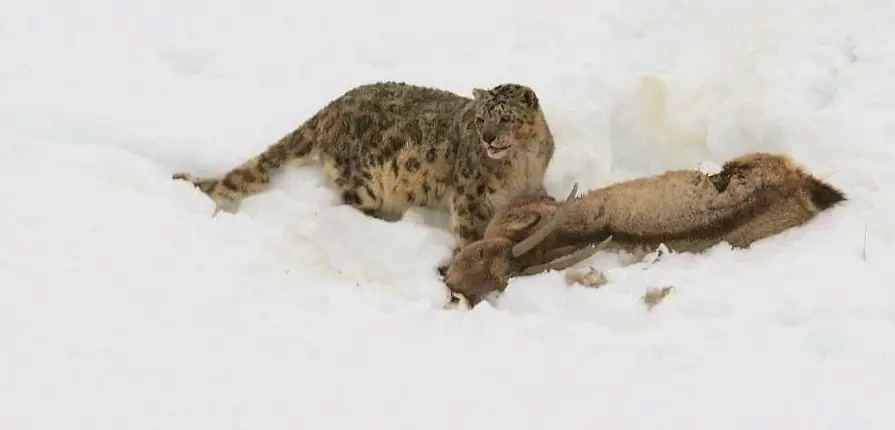
Driving into Kinnaur and Spiti valley in the dead of winter sounds strange to most people – until you understand who it’s really for. For solitude-seekers, wildlife photographers, and anyone chasing a genuine digital detox, the snowbound Spiti Himalaya becomes something else entirely: a place to unplug, and one of the very few regions on earth where a vulnerable, elusive predator like the snow leopard can still be sighted in the wild. That’s exactly why we run dedicated Spiti Valley snow leopard tours through Kibber Wildlife Sanctuary each winter.
Beyond the wildlife, winter is also when you see Spiti at its most honest – you watch, up close, how villages here survive months of sub-zero temperatures with no running water and barely any power.
Trip Snapshot: Spiti Snow Leopard Safari
| Feature | Details |
|---|---|
| Best Time | Late December to March |
| Difficulty | Moderate |
| Maximum Altitude | 4,270 m (Kibber Village) |
| Best Snow Leopard Spotting Locations | Rong Nala Gorge in Kibber Wildlife Sanctuary, along with the plateaux around the Kibber–Chicham Bridge and Chicham Village. |
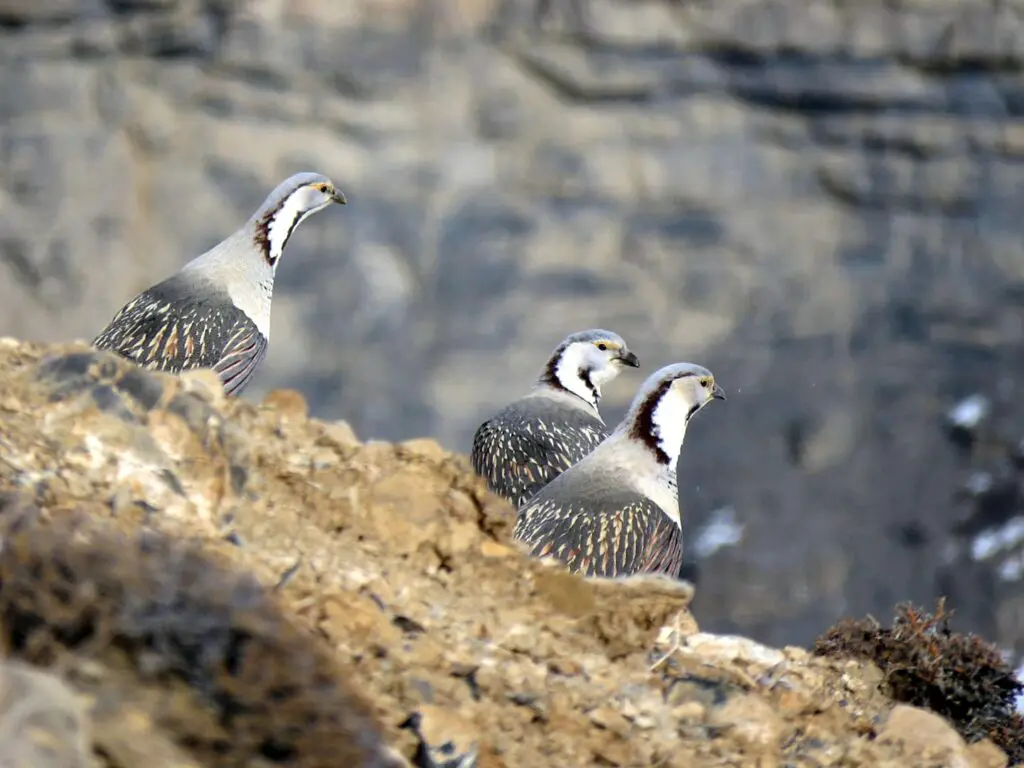
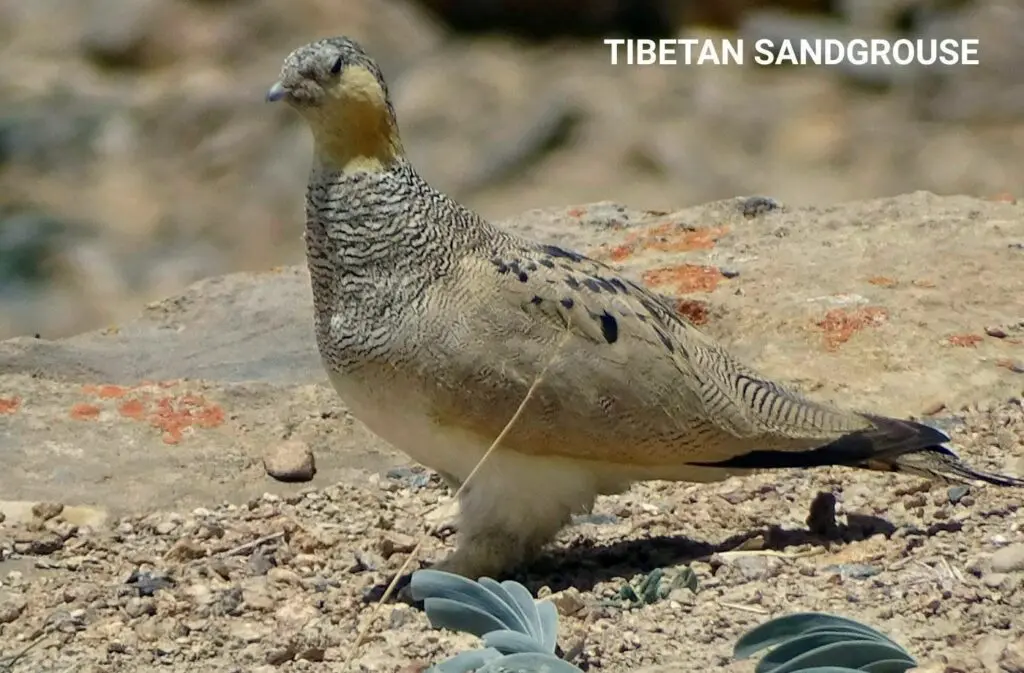
| Key Wildlife | Snow Leopard, Himalayan Ibex, Himalayan Blue Sheep, Red Fox, Himalayan Snow Cock, Himalayan Weasel (Marten), Eurasian Lynx, Tibetan Sandgrouse, and Woolly Hare. |
| Trip Duration | 9 Days / 8 Nights |
| 2026 Scheduled Departures | January 5, January 24, February 8, February 20 |
| Activities | Hiking, Wildlife Spotting, Homestay Stays, Monastery Visits, and Snow Leopard Photography. |
What makes this snow leopard expedition in Spiti worth the discomfort of sub-zero nights is the sheer quiet – a stillness deep enough that you notice your own breathing – paired with near-empty trails, dramatic snow-draped scenery, and a real shot at spotting one of the Himalaya’s rarest cats, all without a phone signal pulling you back to normal life.
Inside Kibber Wildlife Sanctuary
The Indian government notified the roughly 2,220 sq. km stretch of land around Kibber village as a wildlife sanctuary on 25 April 1992. Kibber itself, along with twelve neighbouring villages, forms the sanctuary’s southern edge. It also sits within India’s 16th Cold Desert Biosphere Reserve, a designation granted in 2009.
Species regularly recorded across this cold-desert habitat include:
- Snow leopard
- Himalayan ibex
- Blue sheep (bharal)
- Tibetan wolf / Himalayan wolf
- Red fox
- Eurasian lynx
- Tibetan sandgrouse
- Long-tailed marmot
- Woolly hare
- Pika
- A wide range of birds – kestrels, finches, choughs, larks, redstarts and more
Together with the neighbouring Pin Valley National Park, Kibber Wildlife Sanctuary has also been recognised as an Important Bird Area by Birdlife International.
Lahaul-Spiti district and upper Kinnaur together make up roughly a fifth of Himachal Pradesh’s total land area, and this cold-desert belt has a character all its own – a rain-shadow zone with very little precipitation, sharp swings between day and night temperatures, low humidity, brief summers, harsh windy winters, and a surprisingly rich mix of plant and animal life given how barren it looks at first glance.
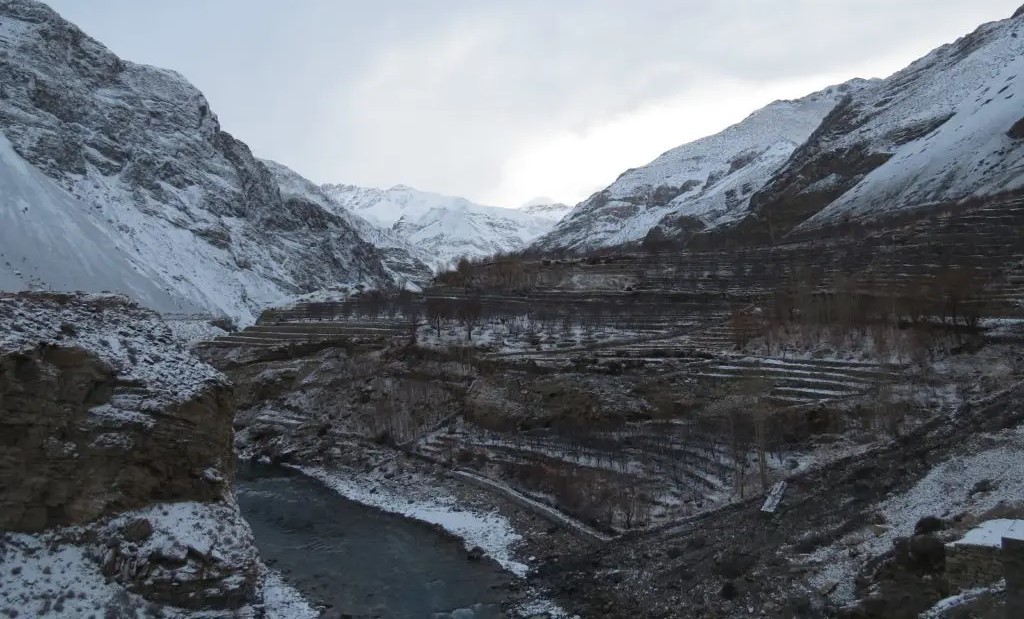
Spiti – the name roughly translates to “the middle land” or “abode of snow” – sits in the trans-Himalayan belt, the driest and outermost stretch of the Himalayan range. It’s a landscape that feels suspended out of time: wide open valleys, glaciers, striking rock formations, and towering peaks on every horizon.
Avalanches, sudden snowstorms, landslides and rockfall are all part of normal winter life here, and the snow leopard is one of the very few large predators built to handle it. Drawing on close to a decade of snow leopard photography experience and a close working relationship with local spotters, we run our snow leopard expedition departures in Spiti through mid-January to late February – the window when sightings are most reliable.
How to Actually Sight a Snow Leopard in Kibber
Patience matters more than anything else on this kind of expedition. You need to be in the right spot at the right hour, and even then, tracking a cat that hunts blue sheep above 3,500 metres in temperatures nearing -30°C is never guaranteed.
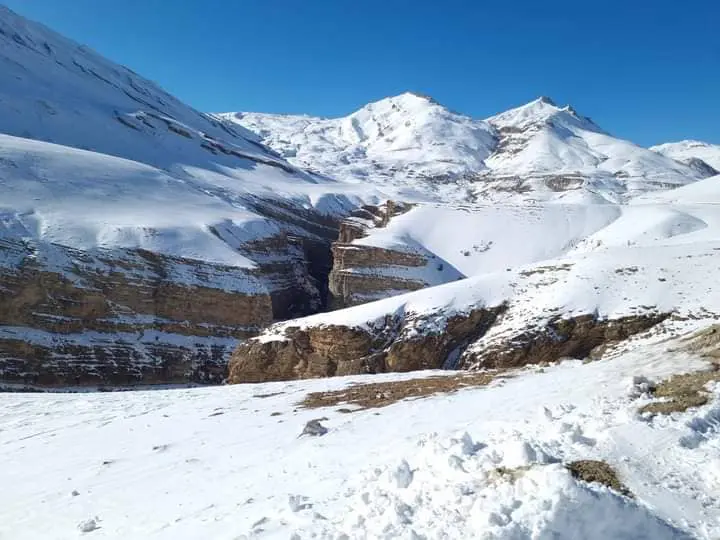
Early mornings and late evenings give you the best odds. As for location, the most productive spots are Kibber Wildlife Sanctuary itself, the plateau between Kibber and Chicham villages, the slopes linking Kee, Gete and Tashigang, the Shilla Nalla belt, the plateau around Langza, Hikkim and Komic, and the slopes near Demul, Salung, Rama and Lalung.
Sighting and Photography Tips
- Hire a local spotter or guide: nobody reads the terrain, weather and likely locations better, and they’ll also sort out permits, logistics and safety.
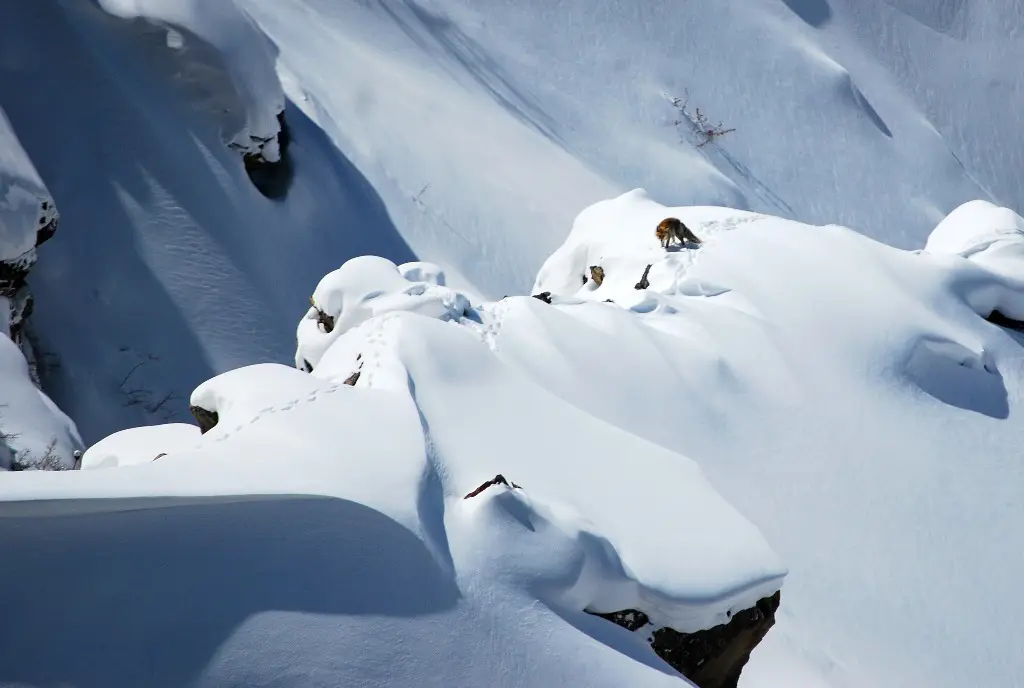
- Time your trip after fresh snowfall: a snow leopard’s grey coat stands out far better against snow, and fresh tracks are much easier to follow.
- Bring patience, and then some more: these cats are masters of camouflage and can stay hidden for days. Expect long, cold hours of watching and waiting.
- Track the prey, not just the predator: wherever you find ibex or blue sheep clustered near rocky ledges and cliffs, a snow leopard is often close by, waiting to ambush.
- Learn their behaviour beforehand: resources from the Snow Leopard Trust and National Geographic, along with classic accounts of Himalayan snow leopard tracking, will help you read situations faster in the field.
- Carry the right gear: snow leopards are most active at dawn and dusk, so you’ll want a large-aperture lens, a high ISO capability, a fast shutter speed, and a sturdy tripod to keep shots sharp in low light.
- Be ready for fast action: a snow leopard can leap up to six times its own body length while hunting. Shoot in continuous mode and stay alert — these moments last seconds.
Time it around mating season: January through early March is when snow leopards are most active and visible, as this is also their mating window.
Driving Into Kinnaur and Spiti in Winter
A winter drive into Kinnaur and Spiti amounts to a full digital detox and an adventure in its own right. The route runs through some of the most exposed stretches of NH5 and the Sumdo-to-Kaza road, and travelling through it in winter gives you a far more intimate look at how local communities actually live and cope.
The hardships are real: patchy road connectivity, driving on genuinely icy surfaces, no running tap water in most places, limited hot water, temperatures well below freezing, and homes without central heating. The single biggest wildcard, though, is the road itself – heavy snowfall or an avalanche can cut off sections for days or even weeks at a stretch.
Snow Leopard Numbers Are Climbing in Himachal
The Himachal Pradesh forest department, working with the Nature Conservation Foundation (NCF), ran the state’s first scientific, camera-trap-based population estimate and arrived at a reliable figure of up to 73 snow leopards, according to reporting by Mongabay India.
An earlier NCF assessment, done in partnership with the state forest department, had put the number at 51 snow leopards spread across roughly 26,112 sq. km of habitat in Himachal Pradesh.
Zooming out to the national picture, the 2024 Snow Leopard Population Assessment in India (SPAI) — led by the Wildlife Institute of India alongside state forest departments, NCF and WWF-India — estimated around 718 snow leopards across the country. Of the roughly 93,392 sq. km surveyed across Ladakh, Uttarakhand, Himachal Pradesh, Arunachal Pradesh, Sikkim and Jammu & Kashmir, 241 individual cats were directly recorded, with Himachal Pradesh’s share estimated at 51.
A more recent survey by the Himachal Forest Department’s Wildlife Wing, again with NCF, pushed that estimate higher still — somewhere between 67 and 103 snow leopards — based on data pulled from 271 camera traps spread across Upper Kinnaur’s Hangrang Valley, Spiti, Lahaul, Pangi in Chamba district, and the Greater Himalayan National Park in Kullu.
9-Day Snow Leopard Expedition Itinerary
- Day 1: Shimla to Sarahan – altitude 2,100 m, 180 km, roughly 7 hours’ drive. Overnight in a hotel.
- Day 2: Sarahan to Kalpa – altitude 3,000 m, 85 km, 5–6 hours. Overnight in a hotel.
- Day 3: Kalpa to Kibber village – altitude 4,270 m, 7–8 hours’ drive. Overnight in a homestay.
- Day 4: Rest and acclimatisation day at Kibber – explore the village and the sanctuary.
- Days 5, 6 & 7: Dedicated snow leopard tracking days around Kibber Wildlife Sanctuary, heading out early to spots like Rong Nala. Tracking guides and porters travel with you, and the day’s plan stays flexible – you move fast the moment a sighting is reported.
- Day 8: Kibber to Reckong Peo.
- Day 9: Reckong Peo to Shimla.
10-Day Spiti Valley Winter Road Trip Itinerary
Regions covered: Shimla, Sarahan, Kalpa, Nako lake, Tabo, Dhankar, Pin valley, Lalung, Ki, Kibber, Gete, Tashigang, Hikkim, Langza and Komic.
| Feature | Details |
|---|---|
| Season | December – March |
| Climate | Bitterly Cold |
| Maximum Altitude | 4,520 m (Komic Village) |
| Trip Duration | 10 Days |
| Trip Type | Road Trip and Snow Hiking |
- Day 1: Shimla to Sarahan – 2,100 m, 180 km, ~7 hours. Overnight hotel.
- Day 2: Sarahan to Chitkul village – 3,400 m, 106 km, 5–6 hours. Overnight hotel.
- Day 3: Chitkul to Sangla to Kalpa – 3,000 m, 75 km, 6–7 hours. Overnight hotel.
- Day 4: Kalpa to Nako to Gyu to Tabo – 3,300 m, 160 km, 7–8 hours. Overnight homestay.
- Day 5: Tabo to Dhankar to Mud village – 3,900 m, 70 km, 4–5 hours. Overnight homestay.
- Day 6: Mud, Pin valley, to Kibber village – 4,270 m, 6-7 hours. Overnight homestay.
- Day 7: Rest and acclimatisation day at Kibber – explore village and sanctuary.
- Day 8: Kibber to Langza to Komic to Hikkim to Tabo.
- Day 9: Tabo to Reckong Peo.
- Day 10: Reckong Peo to Shimla.
What a Snow Leopard Safari in Spiti Actually Involves
Spotting the apex predator of the Spiti Himalaya means short hikes and snow-trekking through Pin Valley and the terrain surrounding Kibber Wildlife Sanctuary. Kibber itself doubles as the base village for several treks, including the route to Parang La, Kanamo Peak, and the Kibber-Tashigang and Kibber-Rumtse trails.
Nobody should go in underestimating the challenge – a snow leopard’s camouflage, near-silent movement and naturally shy nature make it genuinely hard to spot at close range, let alone photograph well.
Winter works in a spotter’s favour, though: snow pushes the cats down to lower elevations in search of easier prey, and from mid-February onward, mating season kicks in, which means more movement as individuals cross into each other’s territory.
How to Reach Spiti During Winter
Both the Rohtang and Kunzum passes shut by late September or early October, which leaves exactly one route open through winter: Shimla to Rampur Bushahr to Reckong Peo to Nako to Tabo to Kaza.
Reckong Peo, the Kinnaur district headquarters, stays well connected to Shimla and Chandigarh, with direct HRTC buses running from Delhi, Chandigarh and Shimla. Even after a heavy snowfall spell, the Shimla-Reckong Peo stretch typically reopens within a day or two.
From Reckong Peo, an HRTC bus departs at 7 AM and reaches Kaza by around 6 PM. Once you’re inside Spiti valley itself, though, there’s no public transport running in winter – your own vehicle or a shared taxi is the only way to get around.
Snow Leopard Trivia Worth Knowing
- Unlike most big cats, snow leopards can’t roar.
- They’re typically found between 3,000–4,500 m, but can range as high as 6,000 m.
- There’s no documented case of a snow leopard killing a human.
- A snow leopard can cover up to 10 metres in a single leap.
- They’re largely solitary animals, except during mating season.
- Climate change is widely considered the single biggest long-term threat to the species.
- Their eyes are pale green or grey – most big cats have yellow or orange eyes.
- They’re most active at dawn and dusk.
A Note on the Literature
Weather Conditions and What to Pack
It gets genuinely, seriously cold – this isn’t a trip to underdress for. Temperatures regularly fall to around -30°C, and the thin, high-altitude air means it’s worth checking in with a doctor beforehand about any necessary medication. If you’ve done high-altitude trekking before, altitude sickness generally isn’t a major concern here.
- Backpack (70–90 litres) for multi-day travel
- High-ankle trekking boots with good support
- Gaiters, to keep snow and moisture out of your boots
- Trekking pole
- A proper down jacket – windproof, fleece or feather-filled
- At least 3 pairs of trek pants – synthetic, quick-dry fabric, no jeans
- At least 2 full-sleeve woollen or fleece layers
- At least 4 full-sleeve T-shirts
- Thermal inners (lower body essential, upper optional)
- Balaclava
- UV-rated sunglasses – non-negotiable for snow glare
- Hand gloves
- Socks – 3 pairs woollen, 4 pairs cotton
- Two 1-litre water bottles (skip single-use plastic)
- Toiletries: SPF 60+ sunscreen, moisturiser, small towel, lip balm, soap, toilet paper, wet wipes
- Headlamp or LED torch
- Energy bars and dry fruits – genuinely essential for winter days in Kinnaur and Spiti
- A basic medicine kit
Where to Stay in Kinnaur and Spiti This Season
Kinnaur has a reasonable spread of stay options through winter. Spiti is a different story – most hotels shut down over winter due to water and heating challenges, so homestays are effectively your only option once you’re inside the valley.
Winter Hikes Around Kalpa and Charang
Charang is the last inhabited village before the Indo-China border and hosts the area’s final ITBP post. For anyone craving a total escape from city life, it delivers — there’s no network coverage here, so work calls simply can’t reach you. That said, Charang is best visited in summer if comfort matters to you; in winter, with temperatures dropping to around -15°C and heavy snow regularly blocking roads for weeks at a stretch, it’s a trip suited to the genuinely adventurous (or the mildly reckless).
Kalpa in winter offers a gentler version of the same experience — dramatic mountain views, quiet snow-covered lanes, and views of the Kinner Kailash range without quite the same level of isolation as Charang.
Book a Spiti Valley Snow Leopard Tour With Us
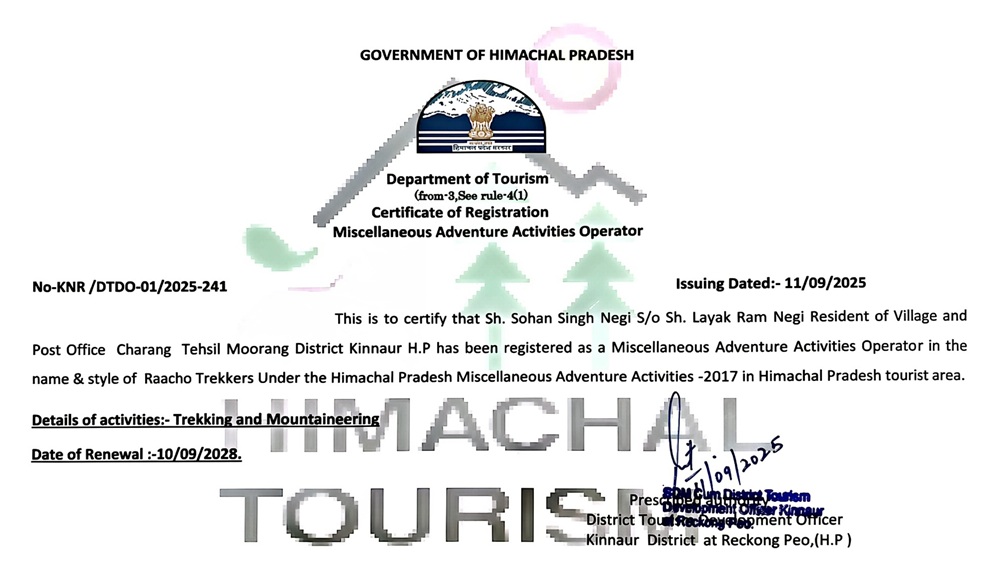
We’ve been running Spiti Valley snow leopard tours and winter expeditions into Kibber for close to a decade now, working with the same local spotting guides who know this terrain better than anyone. If you’re serious about joining a snow leopard expedition in Spiti this season, get in touch with your preferred dates — we’ll confirm availability against our fixed January and February departures and walk you through gear, permits and current road conditions.