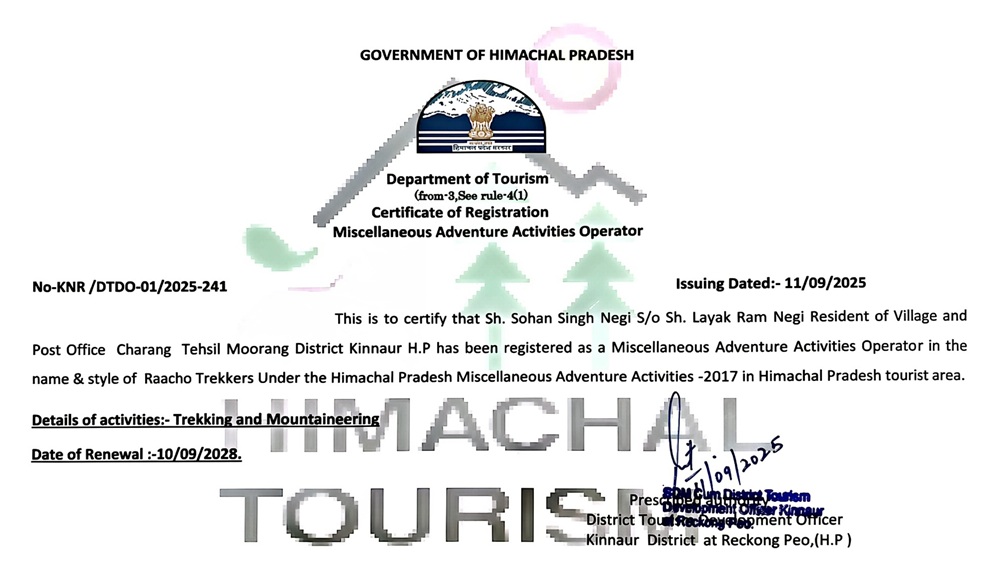
Spiti Valley Itinerary (& Circuit Road Trip) from Shimla
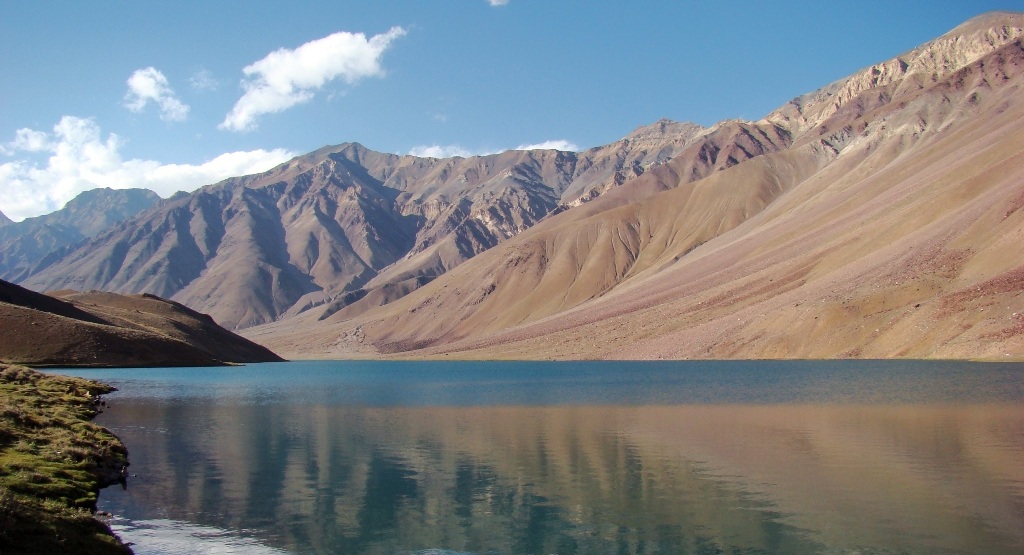
Spiti Valley Itinerary :
Spiti Valley is a cold mountain desert located in the rain shadow region of the Greater Himalayan ranges. It is snuggled in the north-eastern part of Himachal Pradesh.
Proceeding in counterclockwise fashion from Chandigarh, roadway (NH5) of Spiti valley circuit route passes through Solan, Shimla, Narkanda, Rampur Bushahr, Sarahan, Chitkul, Nako, Tabo and Kaza.
The closing line of Spiti circuit traverses along the Spiti river and meets Manali town after it passes through the Atal tunnel or Rohtang pass.
The valley is bounded by the districts of Kinnaur in the south-east, Kullu in the south, and the valleys of Zanskar and Union Territory of Ladakh in the north. In the east, Spiti shares its boundary with Tibet (China).
The name Spiti or Piti — as it is known among the locals— means ‘The Middle Land’ that is the land between India and Tibet.
Departures in 2025
The departure dates for our Spiti Valley circuit are scheduled for the last weekend of May, the second and third weeks of June, the last week of August and between 1 and 15 September 2026.
We can also run personalized trips — tailored to your interests and travel plans — for smaller groups (less than 4 people) and for people willing to incur additional costs. Trip dates are subject to weather and road conditions, as determined by Shimla, Kinnaur and Lahaul & Spiti District Administration.
🚘 Spiti Valley Tour (From Chandigarh, via Shimla-Kinnaur-Kaza-Manali)

Take Chandigarh-Shimla-Kaza-Manali route for Spiti Valley Road Trip
The Chandiarh-Shimla-Kinnaur-Kaza route is recommended for Spiti Valley Circuit road trip because:
- Manali to Solang Valley and Atal Tunnel (north portal) are busy during the peak summer season (i.e. June-August). You may get stuck in a traffic jam.
- Gramphu to Batal Road is riddled with waterfalls, glacial water melts streams, and water crossings. It is easier and more convenient to drive from the Kaza side through this part of the road.
- There is a gradual increase in the altitude (barring Narkanda-Rampur Road segment) when you drive on the Chandigarh-Shimla-Kaza route. This gradual rise in altitude is good for acclimatization, especially for people from the Indian plains.
Event Registration
Fields marked with an * are required
The cold deserts (Lahaul and Spiti district and upper Kinnaur region) in Himachal Pradesh cover about 20% of its total (55673 square km) geographical area. The Himalayan cold deserts have distinct cultural and geographical features. They are characterized with regions of:
- Low precipitation (due to rain shadow effect)
- Large difference in day and night temperatures
- Low humidity
- Short summers
- Freezing cold and windy winters
- Diverse flora and rare fauna
Spiti valley of Himachal Pradesh (which literally translates to an abode of snow) is located in trans Himalayan

The extreme environmental events like avalanches, snowstorms, landslides, and rockfalls are common is this part of Himachal Pradesh state. Rare Himalayan wildlife like Snow leopard has adapted their body to survive under such extreme climatic conditions.
How To Sight Snow Leopards In Kibber WLS?
Patience is key in a snow leopard expedition as with any wildlife expedition. You need to be at the right spotting places at the right time. It is not an easy task to pursue these enigmatic cats who live and are prey on Himalayan blue sheep at an altitude well over 3, 500 meters from the sea level, at temperatures close to -30 degrees.
Fields marked with an * are required
Sighting and photography tips
Here are some tips to increase your chances of sighting the snow leopards.
- Hire local spotter/guides: They have the best knowledge of the terrain, the weather, best time and the spotting locations in their area. They can also help you with sanctuary/national park permits, logistics, and safety.
- Plan your trip after a snowfall: Snow leopards are easier to spot against a snowy background, as their grey fur stands out more. Snow also makes their tracks more visible, which can help you track them down.
- Be patient and persistent: Snow leopards are hailed as the master of camouflaging. They are rare and shy animals that can go unnoticed for days or weeks. You need to be prepared to spend long hours in the cold, waiting and watching for any sign of movement.
- Follow their prey: Snow leopards feed on mountain ungulates, such as ibexes and blue sheep. If you find these animals, you have a higher chance of finding a snow leopard nearby. Look for rocky outcrops, cliffs, and ledges where snow leopards like to ambush their prey.
- Study their behavior: Snow leopards have unique and fascinating habits that can help you understand and anticipate their actions. You can learn more about them from online resources, such as the Snow Leopard Trust and National Geographic, books, such as The Snow Leopard by Peter Matthiessen and Snow Leopard: Stories from the Roof of the World by Don Hunter, or talk to experts who have photographed snow leopards in the wild.
- Use the right equipment: Snow leopards are usually active at dawn and dusk, when the light is low and the colors are muted. You need a camera with a large aperture lens, a high ISO setting, and a fast shutter speed to capture sharp and clear images. You also need a sturdy tripod (Leofoto offers a great range of tripods for wildlife photography) to stabilize your camera and reduce camera shake.
- Capture the action: Snow leopards are agile and powerful hunters that can leap up to six times their body length. Shooting a snow leopard chasing an Ibex is a dream of every photographer. To photograph these spectacular moments, you need to use a continuous shooting mode and a fast shutter speed. You also need to be ready and alert, as these events can happen in a matter of seconds.
- Visit during the mating season: The best time to see and photograph snow leopards is from January to early March, when they are more active. This is also the time when they mate and form pairs. You can witness and capture the intimate and playful interactions of these elusive animals.
Drive To Kinnaur & Spiti valley in Winter
Snow drives to Kinnaur and the Spiti valley in winter is a complete digital detox and an expedition itself.

The fragility & hardships of the winters in Spiti valley is punctuated by the limited road connectivity, driving on icy roads, no running tap water, limited warm water, subzero temperatures, and no room heating.
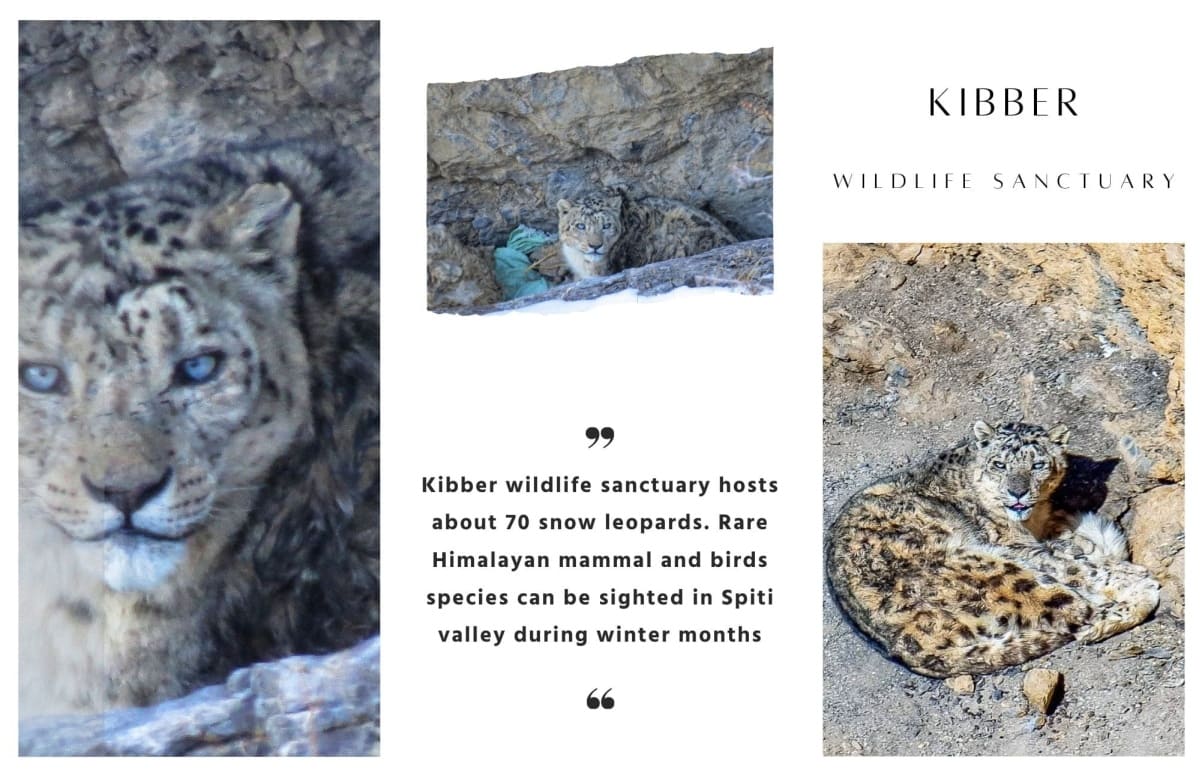
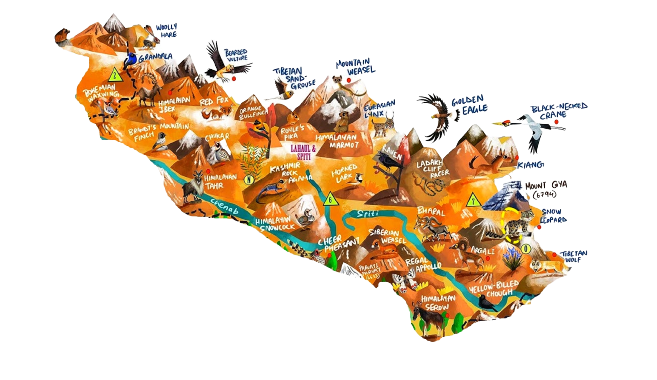
The most frequent sighting has been in Kibber Plateau, slopes between Kee, Gete and Tashigang, Shilla Nalla area, plateau around Langza, Chicham, Hikkim, Komic and slopes around Demul, Salung, Rama and Lalung.
snow leopard population mapping was done using 80 camera traps in upper Kinnaur (Asrang-Lippa wildlife sanctuary), Pin Valley, Baspa valley , Tabo, Tharot-Miyar, Bhaga, Chandra, and upper Spiti valley of Himachal Pradesh

Itinerary for 2024-25 fixed events
Day 1: Chandigarh–Narkanda (altitude, 2700 m): Distance covered 175 km. Drive (on NH5) duration: 6 hours (Overnight stay at Swastik Homestay or similar).
Day 2: Narkanda–Kalpa, Kinnaur (altitude 2960 m). Distance covered 170 km. Drive time on NH5: 5-6 hours (Stay at Hotel Sheetal, Kalpa).
Day 3: Kalpa to Kibber or Chicham Village (altitude, 4270 m): Drive time on NH5 and NH505: 7–8 hours. Overnight stay at a homestay in Chicham.
Day 4,5,6, and 7: Hiking and following the elusive snow leopard around Kibber Wildlife Sanctuary. Reach early for spotting places like Rong Nala in Kibber Wildlife Sanctuary. Snow leopard tracking guides and porters will lead you to the spot. There would not be any specific routine for these 4 days reserved for spotting snow leopards, as we need to move to the spotting places as soon as we hear about the sightings from our spotting guides.
Day 8: Kibber–Kalpa: ~10 hours drive time, covering about 226 km. Stay at Hotel Sheetal, Kalpa.
Day 9: Kalpa to Shimla. 7-8 hours drive on National Highway 5, covering 230 km long distance.


Spiti Valley Winter Road Trip Itinerary
Regions Covered:
Shimla, Sarahan, Kalpa, Nako lake, Tabo, Dhankar, Pin valley, Lalung, Ki, Kibber, Gete, Tashigang, Hikkim, Langza and Komic.
SEASON: December – March
CLIMATE: Bitterly Cold
MAX. ALTITUDE: 4,520 m (Komik Village)
NUMBER OF DAYS: 10 days
TRIP TYPE: Road Trip & Snow Hiking
- Day #1: Shimla – Sarahan: Sarahan Altitude 2100 m Distance covered 180 km. Drive Duration: 7 hours (overnight at hotel).
- Day #2: Sarahan – Chitkul village: Chitkul Altitude 3400 m. Distance 106 km. Drive Duration; 5-6 hours (overnight at hotel).
- Day #3 Chitkul – Sangla – Kalpa Village: Kalpa altitude 3000 m. Distance 75 km. Drive Duration: 6-7 hours. (Overnight at a hotel)
- Day #4: Kalpa – Nako – Gyu – Tabo. Tabo altitude 3300 m. Distance 160 km. Duration: 7-8 hours (Overnight at a Homestay)
- Day #5: Tabo – Dhankar – Mud Village. Mud altitude 3900 m. Distance 70 km. Drive duration: 4 – 5 hours (overnight stay at a homestay).
- Day #6: Mud, Pin valley – Kibber village: Kibber altitude 4270 m. Drive duration: 6–7 hours (overnight at a Homestay).
- Day #7: Rest & acclimatization day at Kibber. Explore Kibber village and Kibber wildlife sanctuary.
- Day #8: Kibber – Langza- Komic-Hikkim-Tabo
- Day #9: Tabo – Reckong Peo
- Day #10: Reckong Peo – Shimla
" Kibber is the base camp village for treks like Parang La, Kanamo peak, Kibber-Tashigang, and Kibber-Rumste village trek. "
Winter is the best time to spot the mountain cats because snow will drive them to lower elevations where it’s easier to find food, and starting in mid-February, mating season commences, so you’re more likely to get leopards crossing into each other’s territor
How to visit Spiti during winter?
Rohtang and Kunzum pass get closed in late September or early October month, so the only way to reach Spiti is through Shimla – Rampur Bushahr – Reckong Peo – Nako – Tabo – Kaza route.
Kinnaur district headquarters Reckong Peo is well connected to Shimla and Chandigarh. Direct public transport (HRTC) buses are runs from Delhi/Chandigarh/Shimla to Reckong Peo. Shimla – Reckong Peo road remains open (or resume normal traffic after 1/2 days) even when there is a long spell of heavy snowfall.

Snow Leopard Trivia
- Unlike the other wild cats, Snow leopards don’t “roar”
- Although Snow Leopards are usually found between 3,000m-4,500m altitudes, snow leopards can range up to 6,000m!
- There’s no record of a snow leopard ever killing a human
- A snow leopard can jump 10m in one (big) leap!
- Snow leopards are mostly solitary.….unless it’s mating time
- Climate change is possibly the greatest long term threat to the snow leopard
- Snow leopards have light green or grey eyes, most big cats have yellow/orange eyes
- Snow leopards are most active at dawn and dusk


“High in the lofty peaks of Central Asia, a rare, elusive cat sits curled on a rocky ledge overlooking a deep, rugged valley. A cold wind wisps frozen snow into the thin air, creating a dazzling silver shower against a brilliant azure sky. It’s quiet up high, just the occasional crack of a distant glacier, a few rocks dancing down the shoulders of near-vertical mountains. Across the valley, a herd of blue sheep, the cat’s favorite food, grazes peacefully on a steep southern slope. Piercing feline eyes are fixed on nothing but see everything. There are no people in sight, just miles and miles of snow-clad peaks in every direction-a sign that all is well at the roof of the world. The big cat rises contentedly, rubs at the knees of the mountain gods, then disappear.”
-Snow Leopard: Stories from the Roof of the World by Don Hunter.
Itinerary for Photo Expedition
Day 1: Chandigarh-Narkanda (altitude, 2700 m): Distance covered 175 km. Drive (on NH5) duration: 6 hours(Overnight stay at HPTDC hotel).
Day 2: Narkanda-Ralli, Kinnaur (altitude 2100 m). Distance covered 144 km. Drive time on NH5: 5-6 hours (Stay at Homestay).
Day 3: Ralli-Kibber Village (altitude, 4270 m): Drive time on NH5 and NH505: 7-8 hours.Overnight stay at a Homestay.
Expedition Highlights
- Highly experienced team of trackers, guides, and wildlife photography tour organizers.
- All staff members are local.
- All-inclusive trip.
- Premium Accommodation at Hotel and Homestays with heating facilities.
- Foldable Camping Chairs for seating while waiting for snow leopard sighting.
- Opportunity to photograph other Himalayan wildlife like Ibex, Blue sheep, and Red foxes.
Inclusions
- Opportunity to witness the majesty of the Shen and photographing them in the wild. We have sighted snow leopards on all expeditions we have organized in the last six years.
- 2 Nights hotel accommodation (HPTDC Narkanda and Nau Nabh Heritage hotel, Rampur).
- 6 Nights homestay accommodation with wood burning Tandoor/ Bukhari heaters and all meals.
- Spotters / Scanners, Guide, porters for carrying camera gear. Walkie-talkie radios
- Monastery fees, wildlife permit fees, and Kibber village Panchayat fee.
- Hot water, tea, and snacks in homestay and at sighting spot.
- Walking pole.
- Foldable stools at spotting site.
- 4WD car for all itinerary days.


Event Registration
Fields marked with an * are required

© 2025 Racho Trekkers. All rights reserved. Designed By: Digital Berge